
Introduction
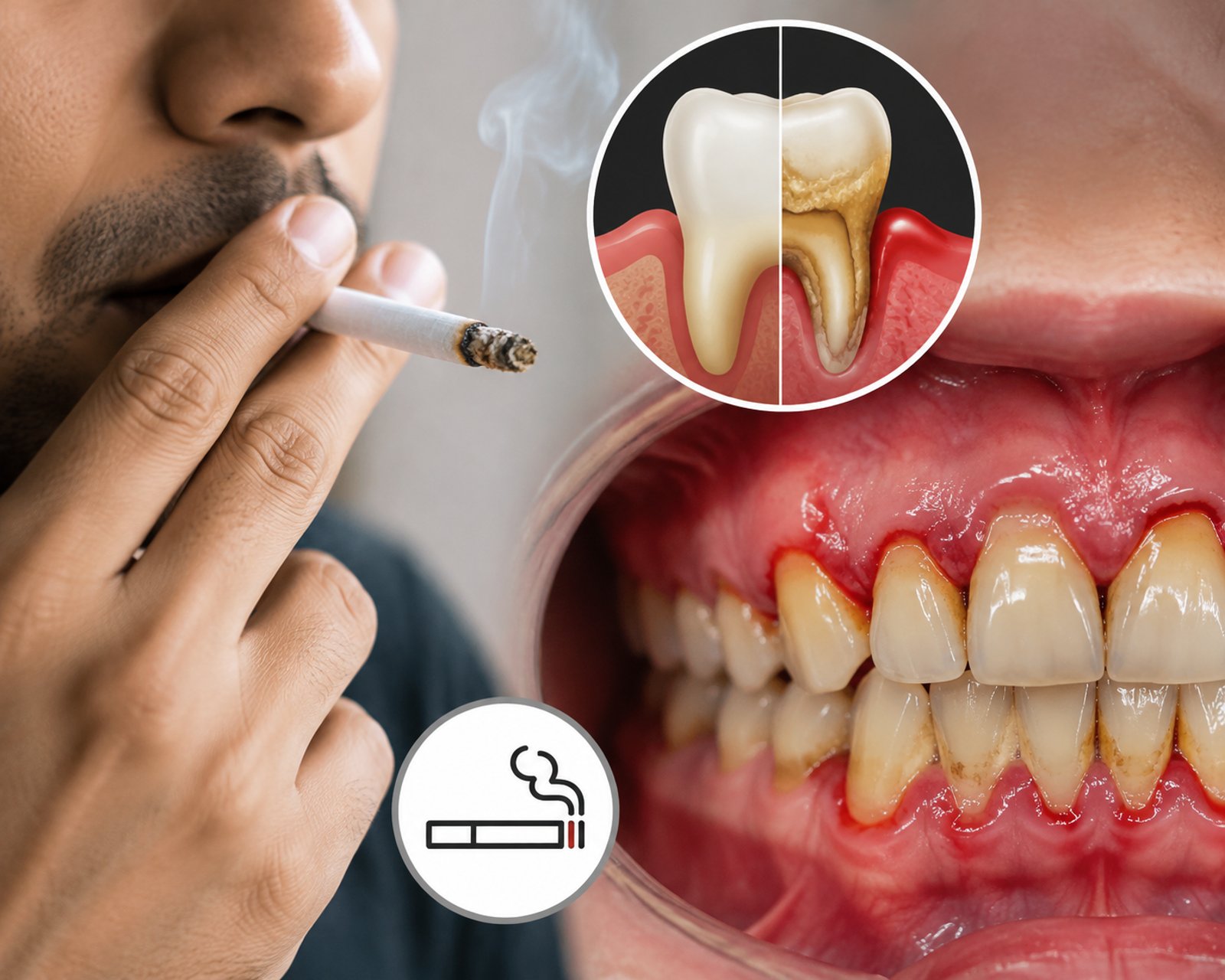
Smoking and gum disease are closely linked. Smoking is a habit where people inhale tobacco smoke. Gum disease is an infection of the tissues that hold your teeth in place. Many studies, including those from the CDC, show that smokers have a higher risk of gum disease. In fact, the effects of smoking on gums can be serious. This blog will explain how smoking affects gum health, the symptoms to watch for, and ways to prevent problems.
How Smoking Affects Gum Health
Smoking harms your mouth in many ways. First, it weakens your immune system. Because of this, your body cannot fight infections well. As a result, your gums become more likely to get infected. Also, smoking reduces blood flow to your gums. This means your gums heal slower after injury or dental work. Over time, these effects make gum disease worse and harder to treat. According to the CDC, smokers are twice as likely to have gum disease compared to non-smokers.
Common Symptoms of Gum Disease in Smokers
Gum disease can be hard to notice at first. However, smokers should watch for these signs:
Sometimes, smoking can hide these symptoms. For example, your gums may not bleed as much, even if they are unhealthy. Therefore, regular dental check-ups are important.
Causes and Risk Factors
There are several causes and risk factors for gum disease in smokers. For instance, tobacco smoke contains harmful chemicals. These chemicals damage gum tissue and bone. In addition, smoking lowers the amount of oxygen in your blood. This makes it harder for your gums to heal. Other risk factors include:
But, smoking remains one of the biggest risks for gum disease.
Diagnosis and Warning Signs
Dentists use several methods to check for gum disease. First, they look for signs like swollen or bleeding gums. Next, they may measure the space between your teeth and gums. Deeper spaces can mean more severe disease. X-rays can also show bone loss around teeth. If you notice any warning signs, such as loose teeth or persistent bad breath, see your dentist soon. Early diagnosis helps prevent serious problems.
Treatment Options
Treating gum disease in smokers can be challenging. However, several options are available:
Quitting smoking is the most important step. When you stop smoking, your gums can heal better. Your dentist may also suggest more frequent check-ups to monitor your oral health.
Prevention Tips and Lifestyle Guidance
Preventing gum disease is possible, even for smokers. Here are some helpful tips:
In addition, ask your dentist about gum disease prevention for smokers. They can offer advice and support to help you quit smoking and protect your gums.
Conclusion
In summary, smoking and gum disease are strongly connected. Smoking increases your risk of gum problems and makes treatment harder. However, you can take steps to protect your oral health. If you smoke, watch for warning signs and visit your dentist often. Most importantly, consider quitting smoking to improve your gum health. Consult a dental specialist Dr. Tejaswari for personalized advice on quitting smoking and protecting your gum health.